From the Board of Directors
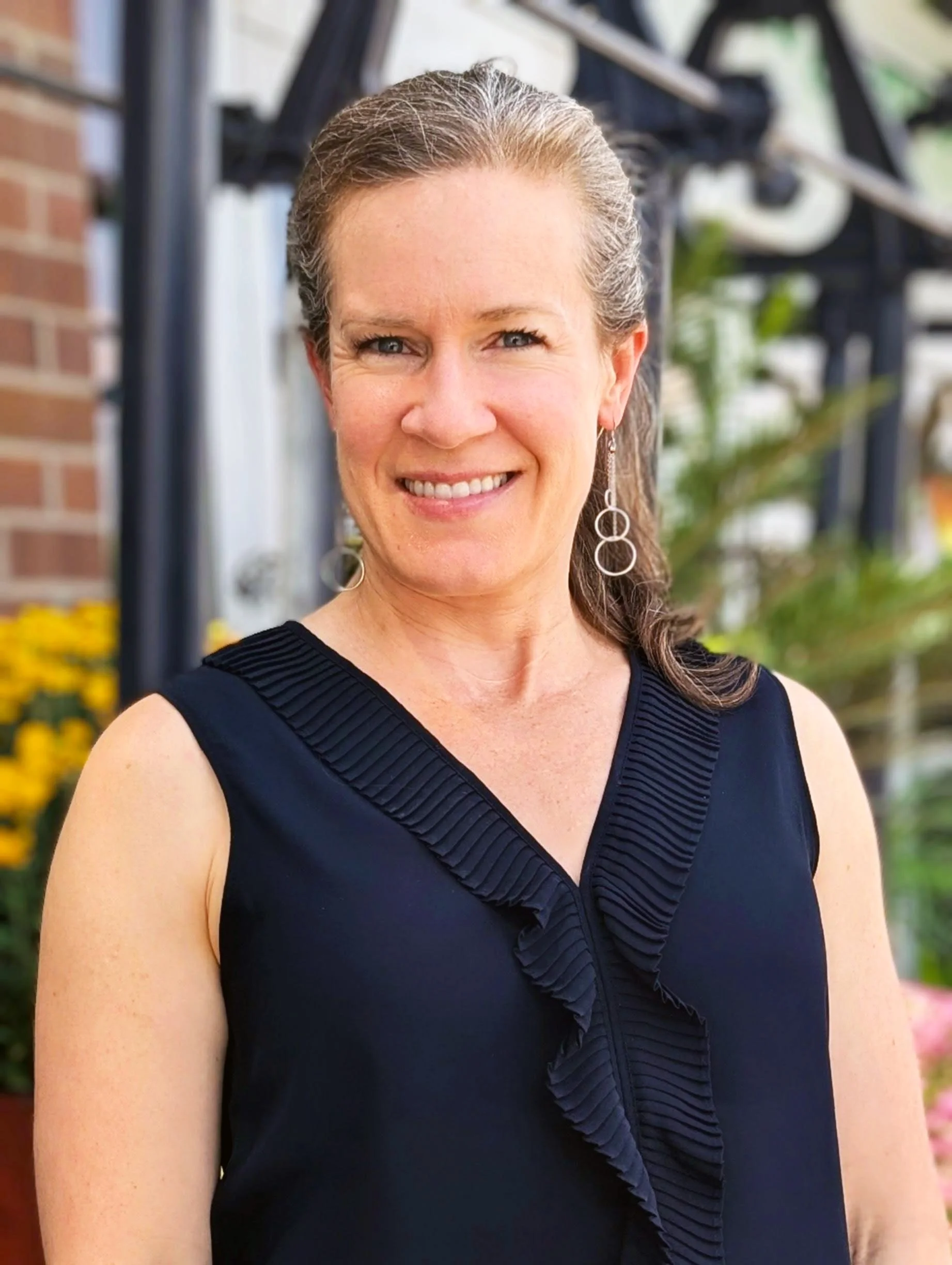
Alison Gruber, Board Member
When our family moved five years ago from Napa, CA, we left a simple 5 block walk to the local Trader Joe’s and Whole Foods. Proximity to our fav grocer was no accident when we chose that home, nor was it when we chose a Lawrence home within walking distance to the beloved Merc. While both enabled access to community and food, I quickly learned how vastly different those forms of grocery entities were from one another — this was my first foray into regular co-op grocer access.
We quickly recognized the sincerity and investment with which the Merc staff communicated with us, realizing that there was a reciprocity in their sense of community, too. As we became further acquainted with one another I began learning more about the Merc: the profits do not benefit far-away corporation head offices — they stay within the faces you see at the co-op (member-owners, staff), they have constantly available educational opportunities for member-owners and employees, the products sold are chosen for *you* and priced to enable fair pay for the farmers/producers/staff as well as return on investment for *you*. Their mark of influence is felt by those who shop and those who shop have an influence! For all of us: our power lies locally.
What if, in addition to all above, your local power absorbed the shock of food inflation and increased the quality of food we provide our families, with the profits circling back to the community — regardless of factors that may be impacting our extended geographic circles and governing bodies? Our most personal power is local so what if?
During the challenging days of the Industrial Revolution, our co-op predecessors did just that. Co-ops buffered and created a powerful ally in each other, especially during times in which citizens sought a bolstering of their own resources. In 1752, Benjamin Franklin established the first cooperative business in the US, a mutual fire insurance company still in operation. Two generations later (1810) we managed to form our first dairy and cheese cooperatives, then agricultural commodities. In 1844 — 34 years later in England, impoverished weavers established the first grocery co-op to buffer the pains of employer-sourced credit and groceries (Rochdale Pioneers) — life in England began to drastically change as ownership in co-op stores and businesses grew to more than 8 million families. In 1844 in the US, Sojourner Truth — a previous slave, civil rights activist/minister, parent — joined and helped build a communally owned and operated silk mill that worked toward the belief that “the rights of all are equal without distinction of sex, color or condition, sect or religion,” focusing on Education and Industry through the support of women’s rights, religious tolerance and collective labor.
Blood, sweat and tears fed the soil of these cooperative businesses, fostering the growth of democratic governments by offering a platform for civil engagement, empowerment and collective action, improving the well-being of society. It was not easy and it was not quick. These communities that cared for each other also created economic opportunities and fostered individual freedoms while providing high quality resources.
While our socioeconomic struggles are a little different in 2026, investing locally is still how a community can provide local power, cushion global inflation, and source democratically desired goods. Investing in the local farmers, sourcing favorable costs through a shared network, creating equitable pay through profits that circle back through the community, providing a return on investment to the owner-members… all of this can happen when we choose to engage in our democratically run co-op.
When we moved to Lawrence, we found community at The Merc Co+op: new friends in the aisle, the familiar faces of the staff, the inside jokes that develop around our routine bulk orders. It is also a buffer to economic inflation, a supplier of high-quality food, a body of people who want to know what you need so they can provide it.
Our family found The Merc Co+op to deliver high value, local community and everything else but can only do it when our member-owners like you are engaging with us democratically. We all need to vote, eat, repeat. Encourage your friends to become members too because your personal power is local.
About the Board
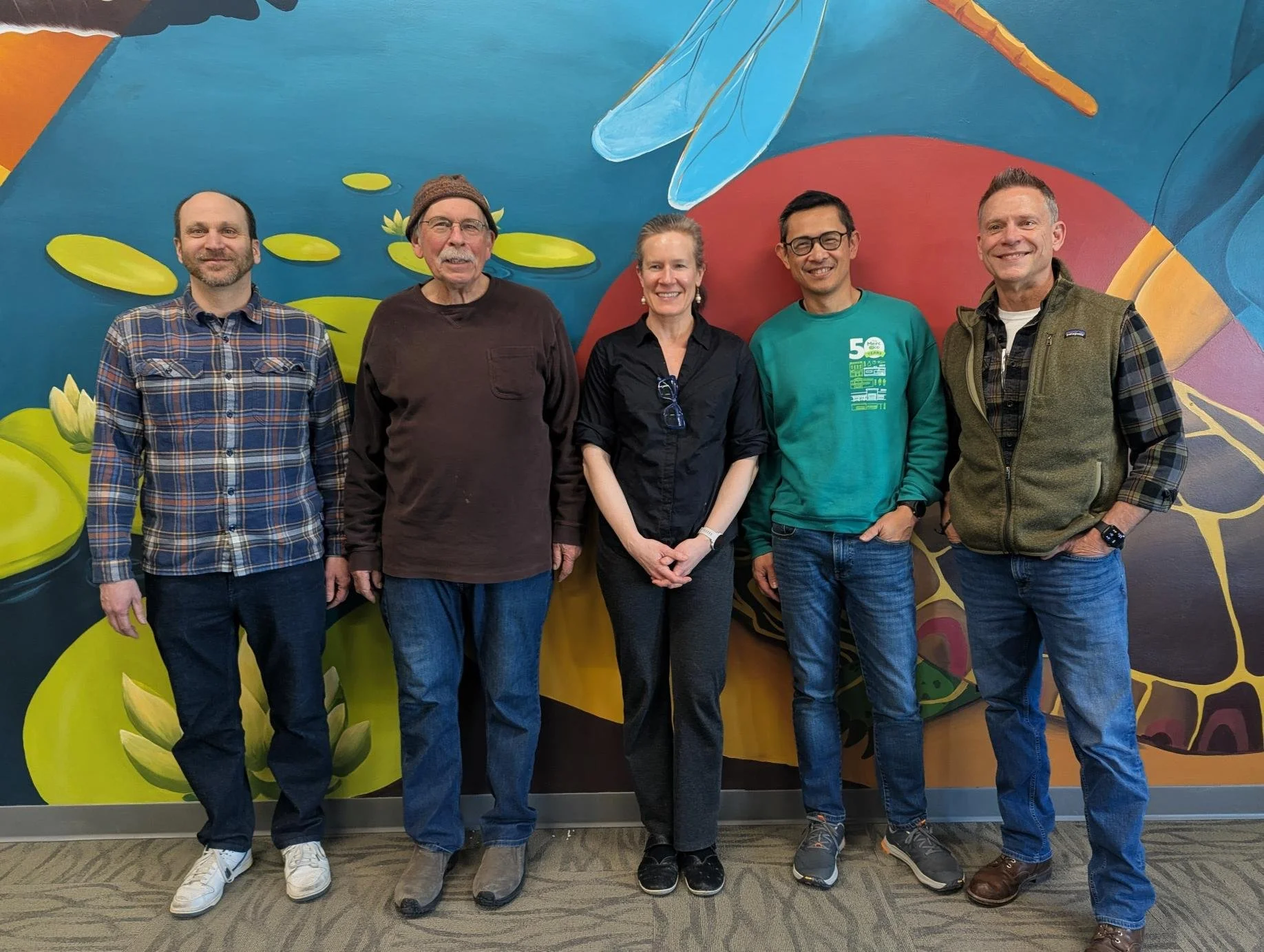
The Merc Co+op’s Board of Directors is made up of seven co-op owners elected by the ownership to serve three-year terms. Any co-op owner is eligible to run for a board position.
The Board acts on behalf of co-op owners, responsible for guiding the overall vision of the co-op and monitoring progress toward that vision. To support this work, the board establishes policies that govern both themselves and the General Manager. The board works closely with the General Manager, who provides regular reports on store operations, including finances, customer satisfaction, and more.
Board Meetings
All co-op owners are invited to attend monthly board meetings. Early in the agenda, the board reserves ten minutes of space to hear from owners who wish to address the board.